
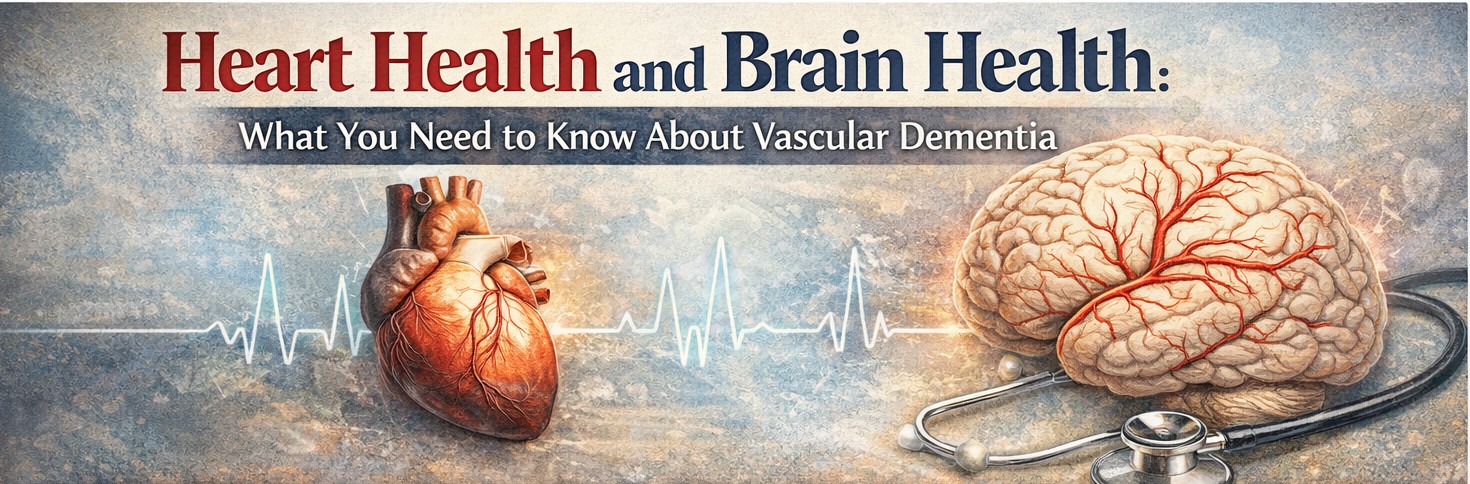
February is American Heart Month, and after many decades of supporting older adults and their families, I have seen firsthand how heart health shapes the quality of life in our later years. The link between your heart and your brain doesn’t get enough attention.
The Second Most Common Form of Dementia
When we think of dementia, most of us immediately think of Alzheimer’s Disease—and for good reason, as it’s the most common form. But there’s another type that deserves far more awareness: vascular dementia. It’s the second most common form of dementia and affects more men than women, yet many people have never heard of it.
Here’s what makes vascular dementia different—and why that difference matters.
It’s Not a Heart Disease, But It Starts with the Heart
Vascular dementia is not heart disease itself. Rather, it’s a type of brain dysfunction directly caused by heart and blood vessel diseases. Think of it this way: when your cardiovascular system is compromised, your brain pays the price.
Vascular dementia develops when cardiovascular issues—like high blood pressure, stroke, or artery disease—damage blood vessels, restricting blood flow and oxygen to the brain. Without adequate blood flow, brain cells are deprived of the nutrients and oxygen they need to function properly. Over time, this leads to cognitive decline.
What Causes Vascular Dementia?
Several heart and vascular conditions can lead to vascular dementia:
- Heart failure – When the heart cannot pump efficiently
- Heart attacks – Which can damage the heart’s ability to supply blood
- Stroke – Both major strokes and “silent” mini-strokes
- Atherosclerosis – Hardened, narrowed arteries that restrict blood flow
- High cholesterol – Which contributes to artery blockage
When the heart cannot pump efficiently, or when blood vessels are blocked or damaged, the brain is deprived of vital nutrients. The result is progressive cognitive decline.
Know Your Risk Factors
The common risk factors for vascular dementia are the same ones your doctor has likely already mentioned for heart disease:
- High blood pressure (hypertension)
- Diabetes
- Smoking
- Sedentary lifestyle
- High cholesterol
- Obesity
It’s important to take these seriously, not just for your heart, but for your brain.
The Good News: Prevention Is Possible
Here’s what gives me hope after all these years working with families: because vascular dementia is vascular-based, managing heart health can help prevent or slow its progression.
Unlike some forms of dementia where we’re still searching for answers, the path forward with vascular dementia is clear:
- Control your blood pressure. This is perhaps the single most important factor. Work with your doctor to keep it in a healthy range.
- Eat a heart-healthy diet. What’s good for your heart is good for your brain. Focus on fruits, vegetables, whole grains, and lean proteins.
- Stay active. Regular physical activity improves circulation and keeps both your heart and brain healthy. You don’t need to run marathons—even daily walks make a difference.
- Manage diabetes. If you have diabetes, keeping your blood sugar controlled protects your blood vessels.
- Don’t smoke. If you do smoke, quitting is one of the best things you can do for your vascular health.
- Monitor cholesterol. High cholesterol contributes to the plaque buildup that restricts blood flow.
What I’ve Learned Over the Years
In my decades of working with older adults and their families, I’ve watched how these seemingly small daily choices compound over time. I’ve seen people who took their heart health seriously maintain their cognitive sharpness well into their later years. I’ve also seen families struggle when vascular issues were left unaddressed.
The beauty of this connection between heart and brain health is that it puts power back in our hands. While we can’t control everything about aging, we can control many of the factors that contribute to vascular dementia.
This Heart Month, Think About Your Brain Too
As we observe American Heart Month this February, I encourage you to expand your thinking beyond just your heart. Every step you take to protect your cardiovascular system is also a step toward protecting your cognitive future.
Your future self—and your family—will thank you.
If you or someone you love is living with a diagnosis of vascular dementia and feeling uncertain about what comes next, you don’t have to face it alone.
Contact the experts at Allies in Aging JFS Eldercare Solutions to get compassionate guidance and a thoughtful plan that addresses today’s needs while preparing for the future.


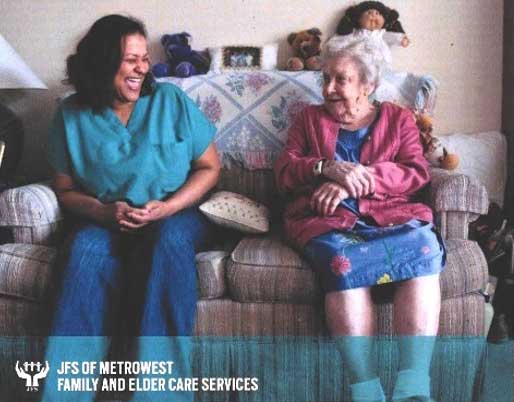 Caregiving demands kindness and radical empathy… Try to imagine that you have dementia, and in your confusion, you don’t know where you are. The familiar house you have lived in for decades appears strange to you, and you want to go home. You are panicked. Only your long-term memory is intact, and you long for your old room in the house you grew up in. As caregivers, our natural impulse is to say, “Honey, we are home. This is our house that we have lived in since 1986! This is not convincing to a person with dementia. If you came upon a stranger who told you they were lost, and wanted to go home, how would you react? Kindly, with reassurance. You might put your arm around them and tell them that you will help them get home or you might say that you will stay with them and not leave them alone. To respond with kindness and patience each time you are asked “When are we going to go home?” as if this is the first time you are hearing this question.